


Mobile applications have become an important part of how businesses communicate with customers, deliver services, process transactions, and build digital experiences. However, creating a successful app involves much more than writing code. A professional development process typically includes discovery, requirements planning, UX/UI design, architecture, development, testing, deployment, and ongoing maintenance.
For this reason, selecting the right mobile app development service provider can have a major influence on an application’s quality, scalability, security, cost, and long-term performance.
Understanding the Role of a Mobile App Development Partner
A mobile app development partner helps transform a business idea into a functional digital product. Depending on the project, its responsibilities can range from product strategy and user experience design to application development, backend integration, quality assurance, deployment, and post-launch support.
Instead of treating development as a single coding project, an experienced provider approaches the application as a complete product lifecycle. This helps connect business objectives with technical decisions and reduces the possibility of discovering major requirements or integration problems late in development.
Starting With Business and User Requirements
Successful applications begin with a clear understanding of the problem they are intended to solve. Before development starts, teams should identify the target audience, business objectives, core features, user journeys, technical requirements, and expected outcomes.
This discovery stage also helps distinguish essential MVP features from enhancements that can be introduced later. A well-defined scope can make development easier to manage while reducing unnecessary complexity and uncontrolled feature expansion.
Creating a User-Centered Experience
An application’s functionality is important, but users also expect an experience that is intuitive and responsive. UX research, user flows, wireframes, prototypes, and interface design can help identify usability problems before substantial engineering resources are committed.
A capable development partner considers navigation, accessibility, screen layouts, interaction patterns, onboarding, error handling, and device differences. The goal is to make important actions understandable without forcing users to learn complicated workflows.
Selecting the Right Technology
Technology decisions should be based on the application’s requirements rather than trends alone. Depending on the project, a team may consider native iOS or Android development, cross-platform frameworks, backend technologies, cloud services, APIs, databases, and third-party integrations.
The right choice depends on factors such as performance requirements, development budget, target platforms, expected scale, integration needs, maintenance requirements, and available technical resources. A technology stack that works well for a simple consumer application may not be appropriate for a complex enterprise system.
Building Security Into the Development Process
Security should not be treated as a final inspection before launch. Secure development practices can be incorporated throughout requirements gathering, architecture, implementation, testing, deployment, and maintenance.
Applications may handle personal information, authentication credentials, payment information, business data, or communication records. A development team should therefore consider secure authentication, authorization, encryption, protected data storage, API security, dependency management, and appropriate security testing.
Regular security reviews are also valuable after launch because vulnerabilities and technology dependencies can change over time.
Testing Across Devices and Conditions
Mobile applications operate across different devices, screen sizes, operating-system versions, network conditions, and hardware configurations. Testing should therefore go beyond checking whether the application works on a developer’s device.
A comprehensive quality process can include functional testing, usability testing, performance testing, compatibility testing, integration testing, regression testing, and security testing. Automated testing can also help teams repeatedly verify critical functionality as new versions are introduced.
Testing throughout development rather than waiting until the final stage can make defects easier and less expensive to resolve.
Managing Integrations and Backend Systems
Many mobile applications depend on services outside the mobile interface. These may include payment gateways, customer databases, authentication systems, maps, messaging platforms, analytics tools, cloud infrastructure, and business-management software.
An experienced development provider evaluates these dependencies early. This is important because a seemingly simple mobile feature can require significant backend architecture, API development, data synchronization, or security controls.
Strong integration planning helps create a more reliable connection between the mobile application and the systems supporting it.
Launching the Application Successfully
Application development does not end when the final build is ready. A professional launch process may involve production configuration, app-store assets, privacy information, release testing, analytics configuration, signing, submission, and post-release monitoring.
Preparing these elements early can reduce last-minute problems and help ensure that the application is ready for real users.
Why Post-Launch Support Matters
Launching an application is the beginning of its operational lifecycle rather than the end. Mobile operating systems evolve, devices change, dependencies receive updates, security issues emerge, and user expectations develop.
Post-launch support can include bug fixes, performance improvements, operating-system compatibility updates, security updates, monitoring, analytics reviews, and new feature development. Ongoing maintenance helps keep an application functional and relevant over time.
Improving Performance and Scalability
An application that works well with a small user base may encounter performance challenges as adoption increases. Scalability should therefore be considered during architecture and backend planning rather than addressed only after growth creates problems.
Developers can evaluate database design, API performance, caching, cloud infrastructure, application architecture, network requests, memory consumption, and other performance factors. Building with future growth in mind can make it easier to accommodate increasing traffic and new functionality.
Controlling Costs and Development Timelines
The cost of an application depends on numerous factors, including feature complexity, number of platforms, integrations, design requirements, backend infrastructure, security needs, testing requirements, and ongoing support.
A reliable provider should communicate these factors clearly and establish realistic project milestones. Breaking development into defined phases or iterations can provide stakeholders with opportunities to review progress and identify changes before they become expensive.
Rather than focusing only on the lowest initial quotation, businesses should consider the total cost of ownership, including maintenance, updates, infrastructure, support, and future development.
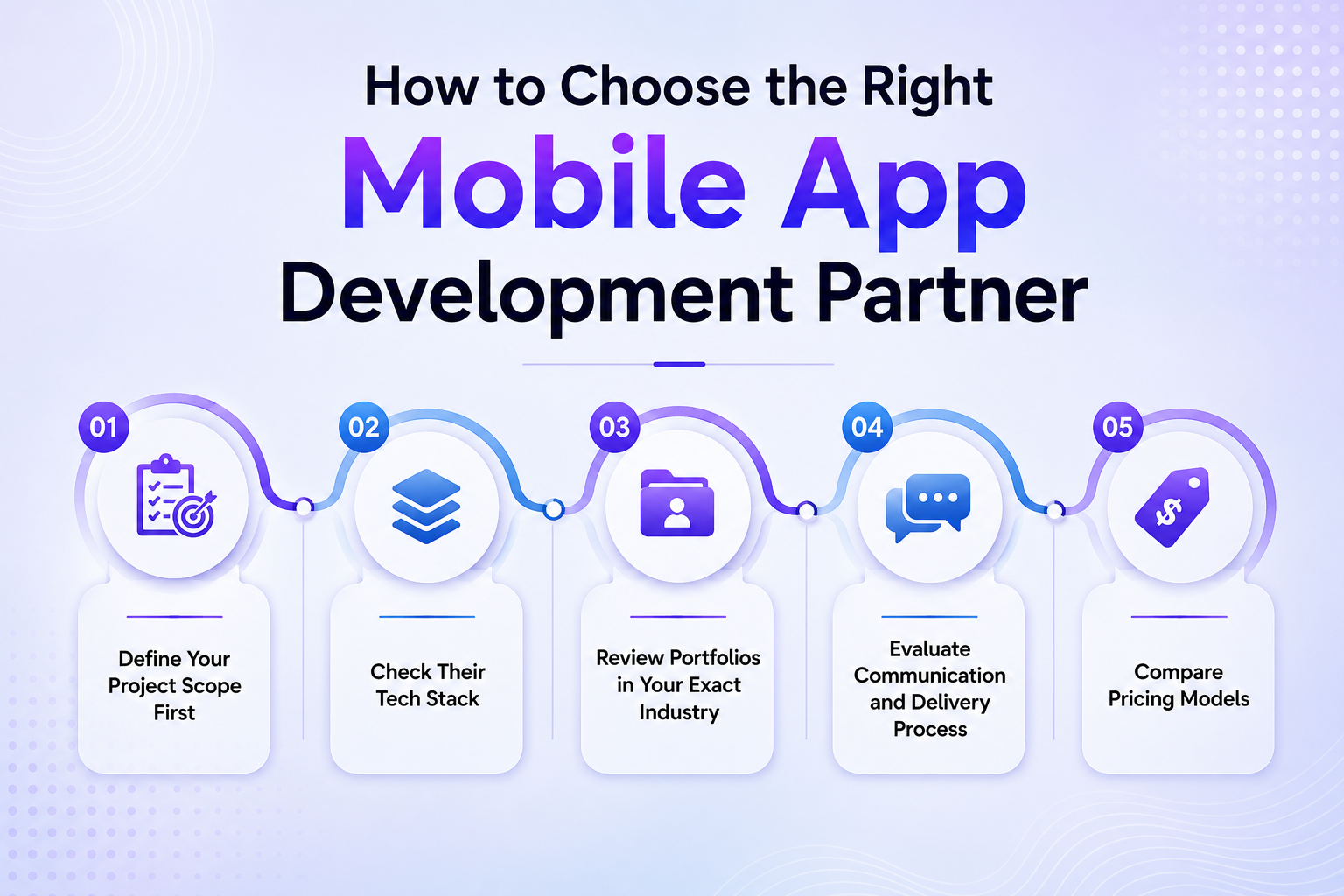
How to Choose the Right Provider
Businesses should evaluate potential providers based on more than technical skills. Important considerations include relevant experience, development methodology, communication practices, quality-assurance processes, security approach, technology expertise, project management, and post-launch support.
It is also useful to understand who owns the source code, documentation, design assets, infrastructure accounts, and intellectual property. Clear ownership arrangements can reduce dependency on a particular vendor and make future development easier.
The Value of a Long-Term Development Relationship
A strong development relationship can extend beyond the initial application launch. As businesses collect user feedback and production data, they can identify opportunities for improved workflows, new features, better performance, and stronger customer engagement.
A development partner that understands the application’s architecture and business objectives can help prioritize these improvements and maintain technical consistency as the product evolves.
Conclusion
Choosing a mobile app development service provider is an important business decision because the provider can influence everything from initial product planning and technology selection to security, user experience, launch readiness, and long-term maintenance.
The strongest development approach treats a mobile application as an evolving product rather than a one-time coding project. By combining thoughtful planning, user-centered design, appropriate technology, continuous testing, strong security practices, and post-launch support, businesses can create applications that are more reliable, scalable, maintainable, and valuable to their users.
